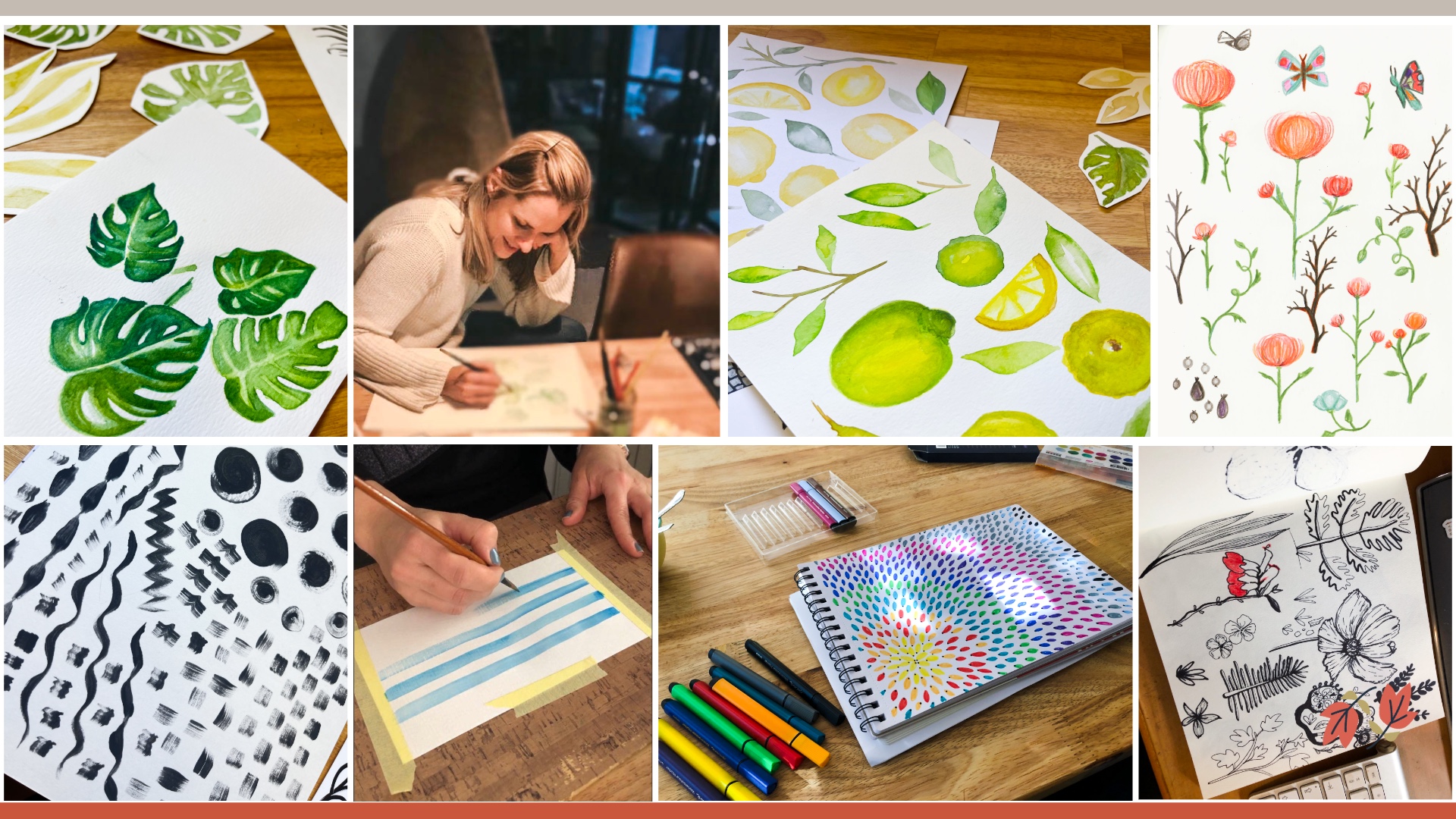
Pikapattern began with hand-painted leaves, pencil sketches, and quiet moments of creativity. Painting and drawing became a way to process loss, heal as a family, and rediscover joy through colour, line, and form.
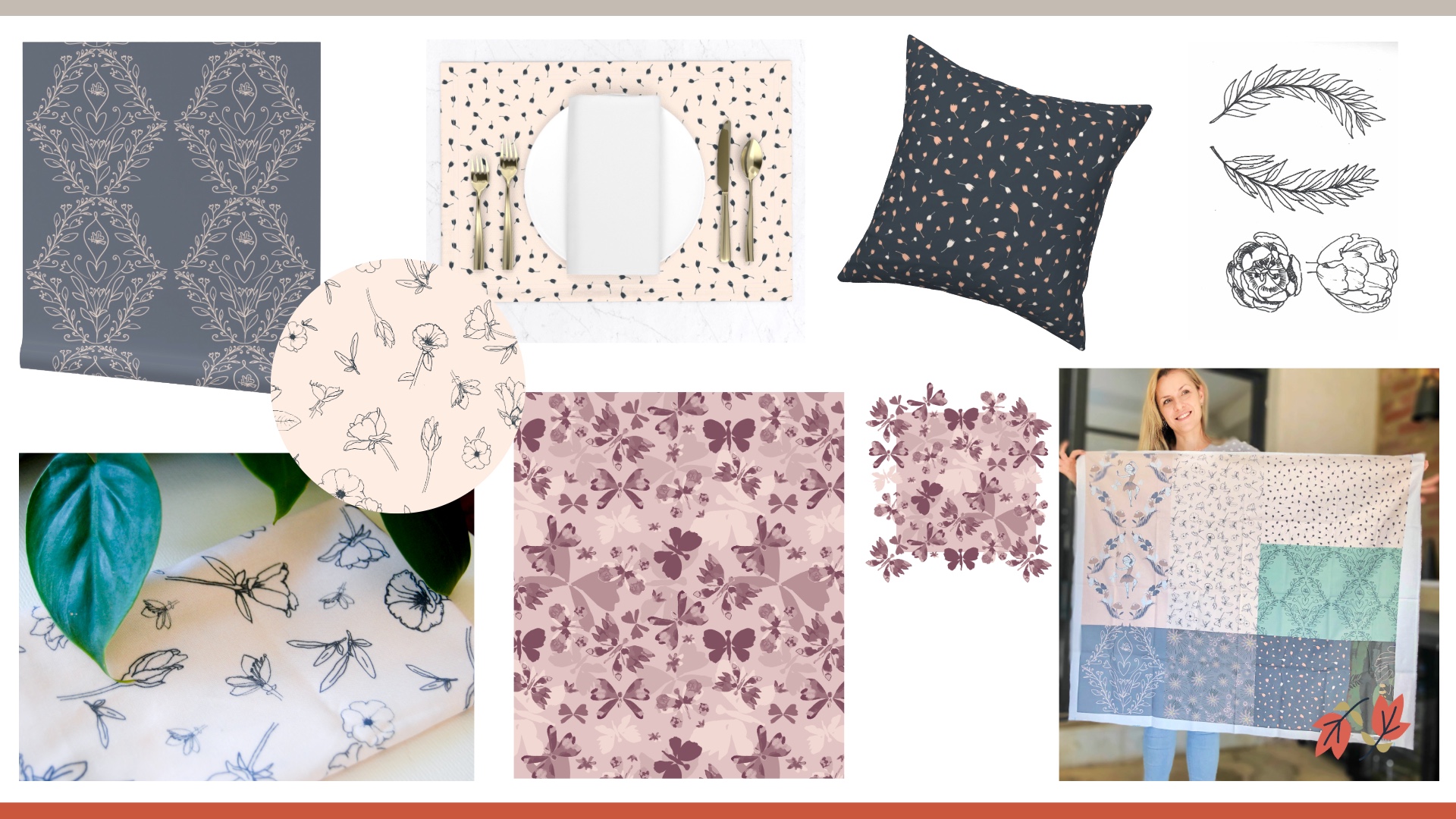
Early print-on-demand experiments marked a turning point. Holding fabric printed with original designs for the first time was unforgettable — a moment where illustration truly became textile, and possibility became real.
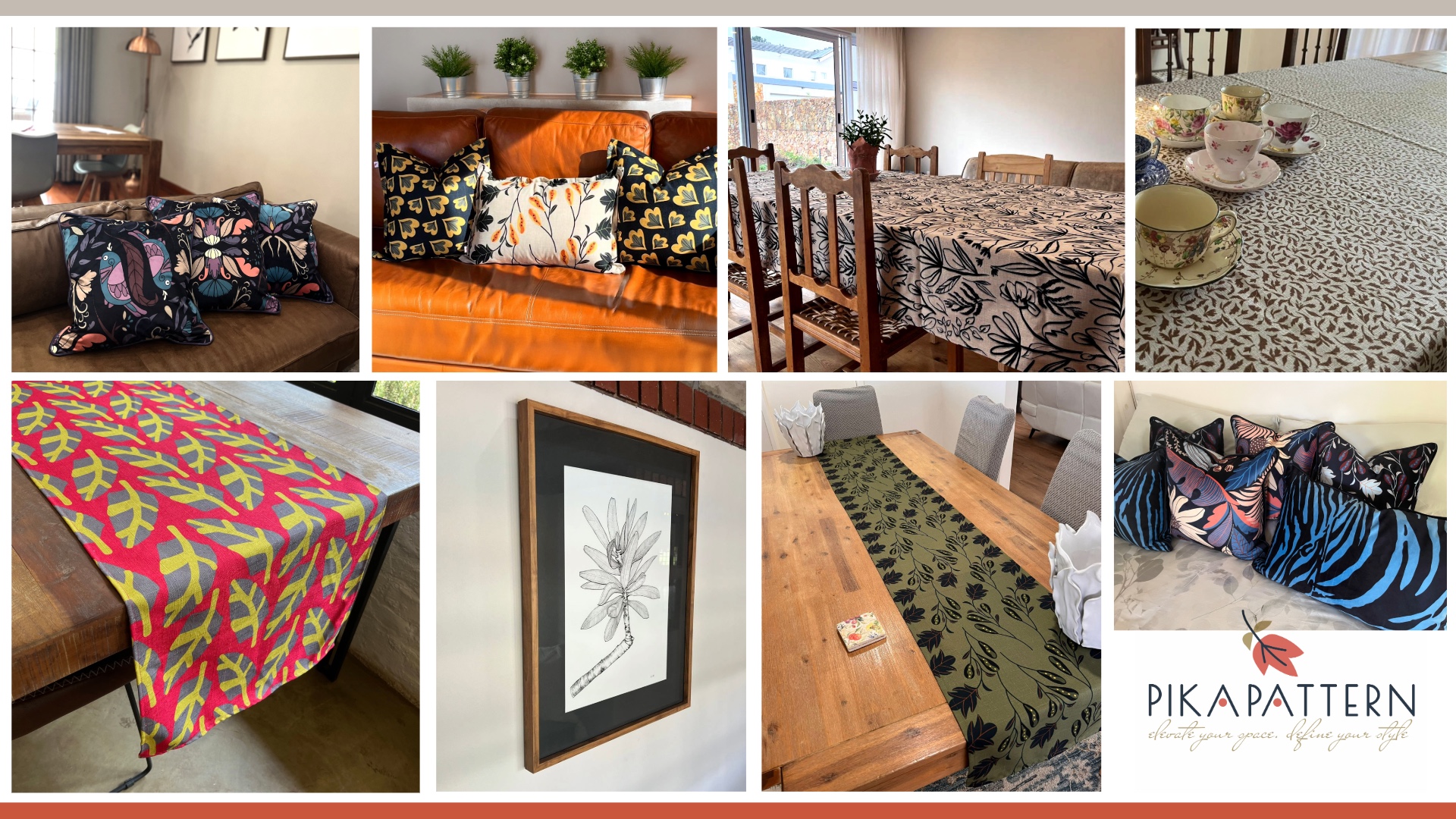
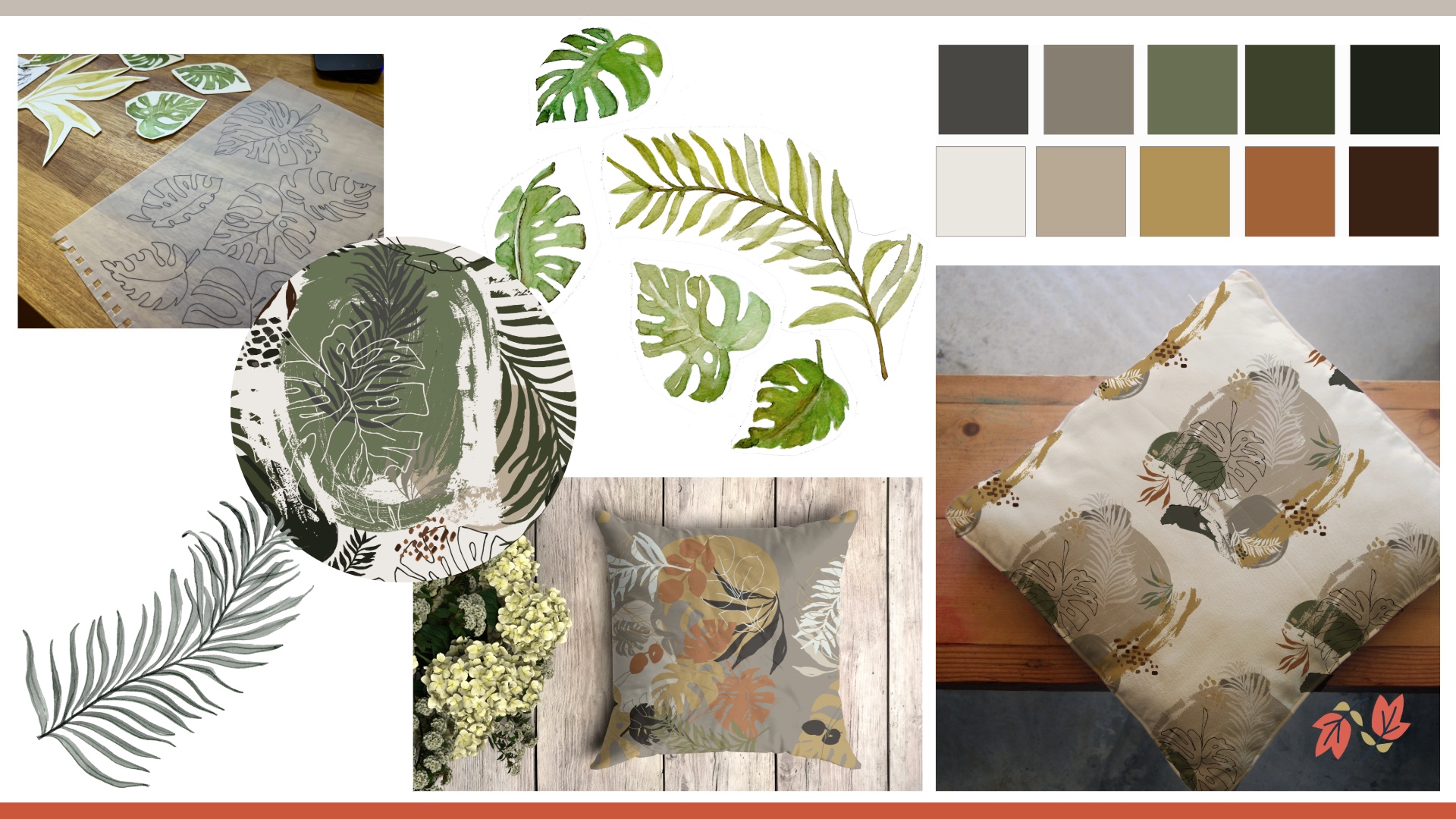
Patterns slowly moved from paper into digital spaces for refinement — adjusting scale, colour, and repeat until balance was found. From digital to fabric, and from fabric into everyday spaces, where pattern becomes part of how a home feels and tells its story.
Learning the Language of Pattern
Sketchbook drawings were transformed into seamless repeating patterns, teaching rhythm, balance, and scale. Some designs — like the penguins — found an audience early on, confirming that hand-drawn character could translate beautifully into pattern.
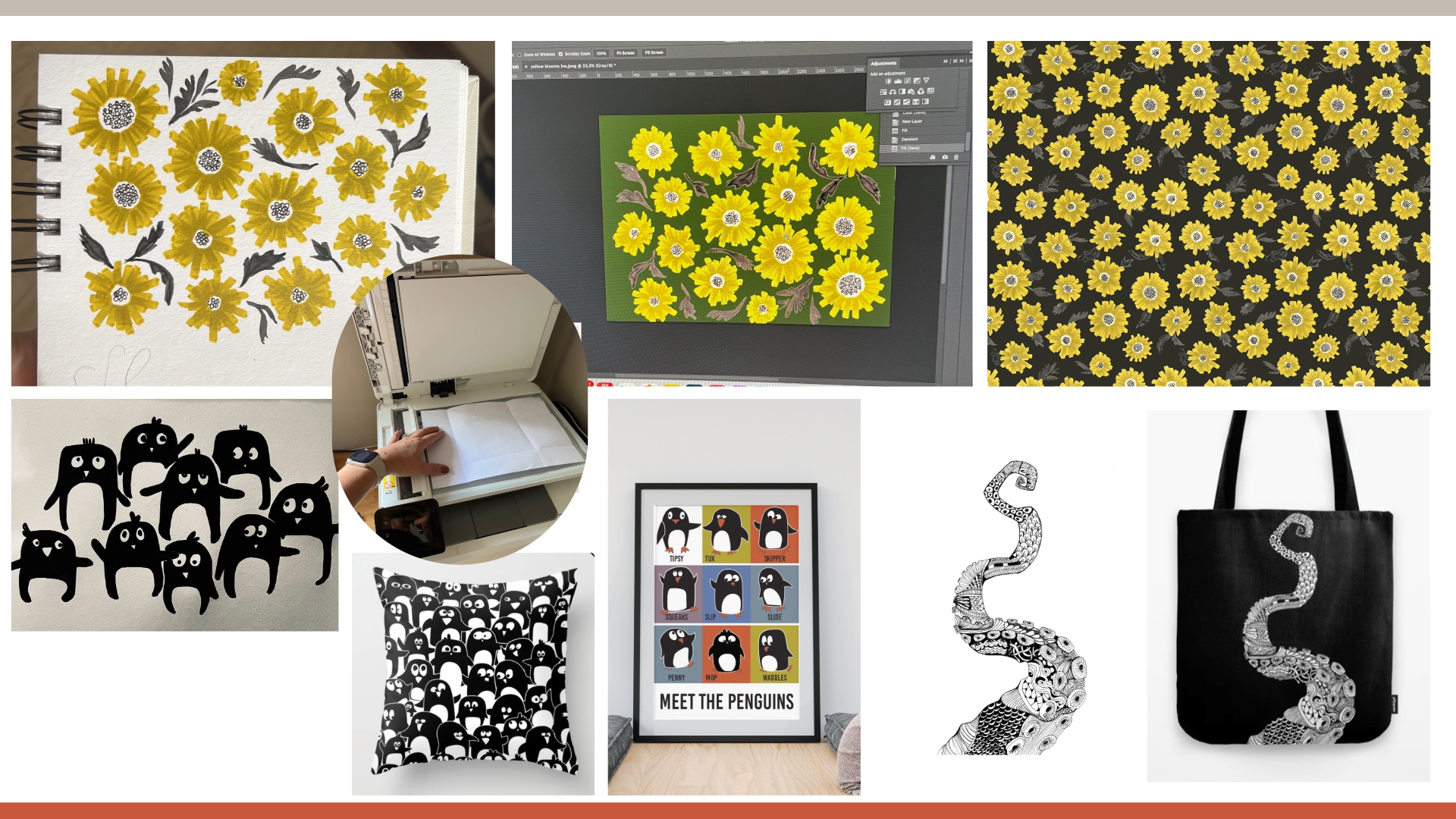
As Pikapattern evolved, digital tools became part of the creative process — offering freedom, flexibility, and control over colour and scale. While many patterns still begin on paper, digital illustration allows ideas to develop efficiently, without limits. Technology supports the process, but the heart of the work remains rooted in drawing, painting, and thoughtful design.
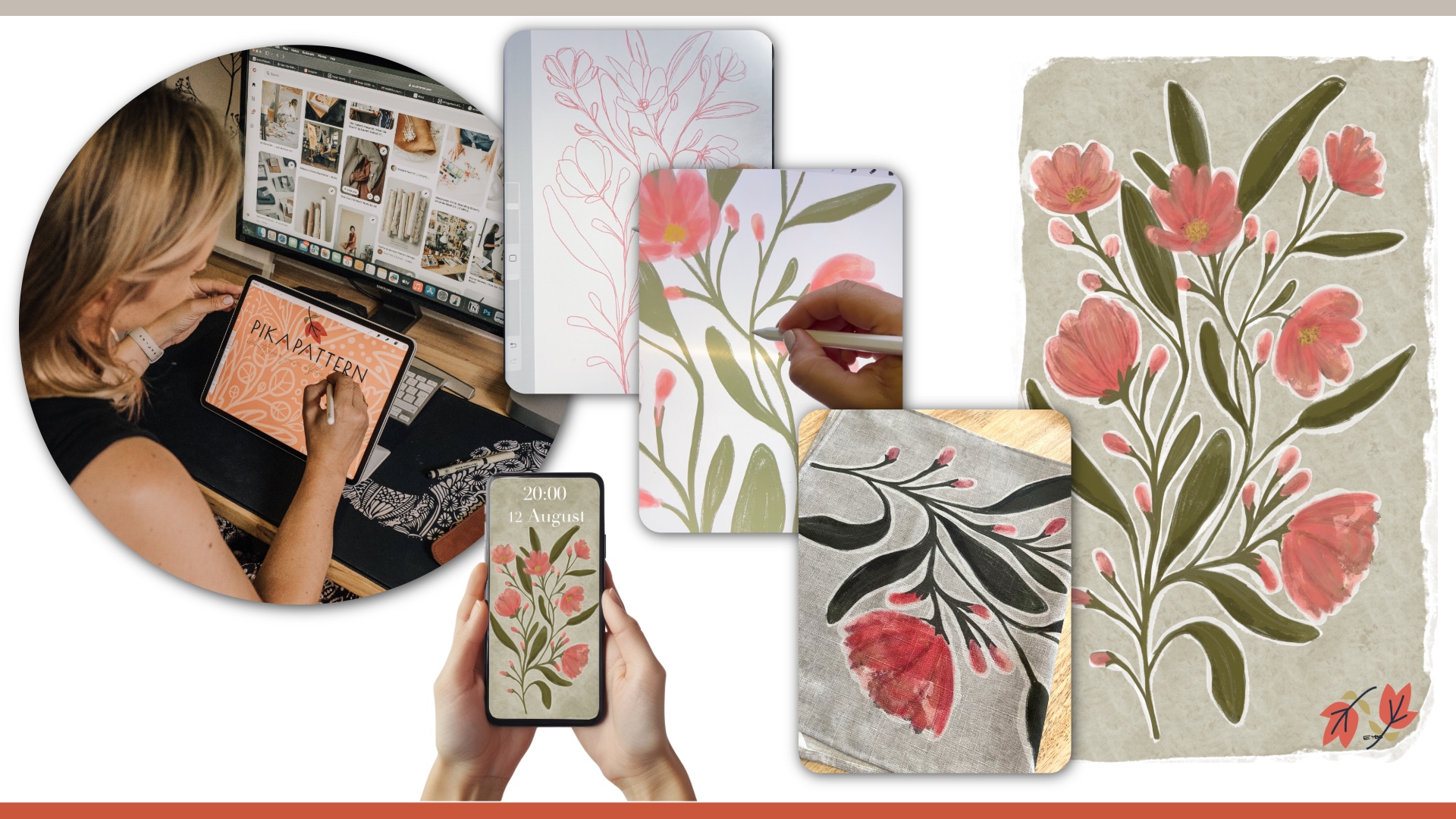
Designing for Real Homes
Today, Pikapattern continues to design intentional patterns that move from illustration to textile to everyday spaces — creating pieces meant to be lived with, loved, and woven into the story of a home.